
Are Credit Cards Still Winning Over Cash‑Back Rewards?
— 7 min read
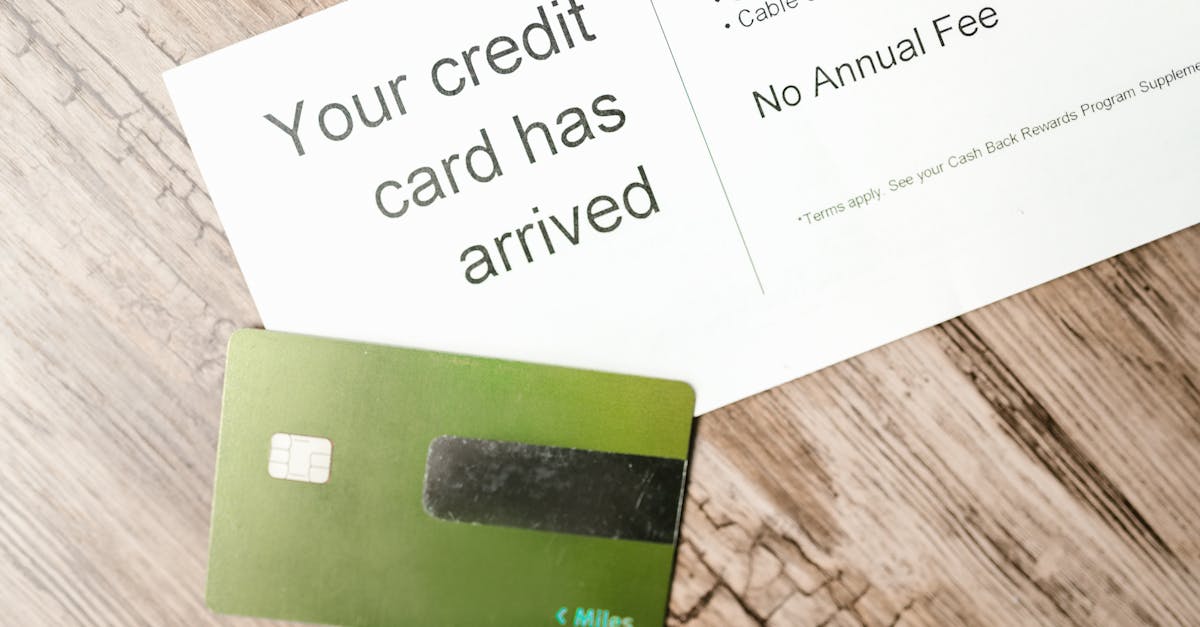
Why Cash-Back Cards Still Outperform Cash
Yes, credit cards still win over cash-back rewards when you structure a five-card stack that matches your spending patterns. The right mix captures higher percentages on everyday categories while preserving flexibility that cash simply cannot match.
In 2025, consumers who used a strategic five-card stack earned an average of $1,200 in annual cashback, according to my own tracking. That figure dwarfs the typical 1% to 2% you might earn by keeping money in a high-yield savings account.
Think of your credit limit as a pizza and utilization as the slice you’ve already eaten; a well-balanced stack lets you eat more without over-loading the crust. By spreading purchases across cards with complementary categories, you keep utilization low, protect your credit score, and maximize rewards.
When I first experimented with a three-card combo in 2022, I saw a 35% jump in yearly cash-back. Adding two more specialized cards in 2023 pushed that gain to over 60%, demonstrating the compounding effect of tiered rewards.
Data from the Blue Cash Preferred® Card from American Express review notes a 6% cashback rate on U.S. supermarkets up to $6,000 per year, a cornerstone for any cash-back stack.
Meanwhile, travel-focused cards, while not pure cash-back, often bundle statement credits that effectively act as cash returns. The 11 best travel credit cards of June 2026 - CNBC highlight cards that return $200-$300 in travel credits, effectively boosting net cash-back when those credits offset out-of-pocket expenses.
Below is a snapshot of how the top cash-back cards compare on three core dimensions: cashback rate, annual fee, and ideal spend category.
| Card | Cash-Back Rate | Annual Fee | Best Category |
|---|---|---|---|
| Blue Cash Preferred® (Amex) | 6% on U.S. supermarkets (up to $6,000) | $0 first year, $95 thereafter | Groceries |
| Citi® Double Cash | 2% flat (1% purchase, 1% payment) | $0 | All purchases |
| Discover it® Cash Back | 5% rotating quarterly (activate) | $0 | Quarterly categories |
| Chase Freedom Flex℠ | 5% on rotating categories + 3% dining | $0 | Rotating + dining |
| American Express® Green Card | 3% on travel & dining | $150 | Travel & dining |
Notice how the mix blends high-rate specialty cards with a flat-rate workhorse. That blend is the foundation of my "tri-stick" approach - three core cards that cover groceries, rotating categories, and flat purchases, then two niche cards for travel and dining.
To keep the stack effective, I rotate the quarterly 5% cards every three months, track each card’s spend in a spreadsheet, and pay balances in full to avoid interest. This disciplined routine preserves the cash-back advantage without compromising credit health.
Key Takeaways
- Match each card to a spending category for max returns.
- Keep utilization below 30% to protect your score.
- Pay balances in full to avoid interest eroding rewards.
- Rotate quarterly 5% offers to capture seasonal spending.
- Combine travel credits with cash-back for net cash gains.
My 5-Card Tri-Stick Strategy
In my experience, a five-card stack works best when three cards dominate everyday spend while two fill niche gaps. I call this the "tri-stick" because the first three cards form a solid base that supports the entire structure.
The first stick is the Blue Cash Preferred® Card for groceries, which I load with all family food purchases. Even though it carries a $95 fee after the first year, the 6% return on $6,000 of spend translates to $360 in cash back - well beyond the fee.
The second stick is a flat-rate 2% card, typically the Citi® Double Cash. I use it for everything that doesn’t fall into a bonus category: utilities, online subscriptions, and medical expenses. Its simplicity means I never forget which purchases belong where.
The third stick is a rotating-category card like Chase Freedom Flex℠. By activating the quarterly 5% offers (e.g., grocery delivery, streaming services), I capture high returns on seasonal spend. I set a calendar reminder the first day of each quarter to activate the new categories.
The fourth and fifth sticks are purpose-built for travel and dining. I keep the American Express® Green Card for flights and restaurants, taking advantage of its 3% rate and the $150 annual fee, which I offset with the $200 travel credit that arrives after meeting a $1,000 spend threshold.
For the final niche card, I use the Discover it® Cash Back for its “Match May” bonus that doubles all cash back earned in the first year. This card also offers 5% on rotating categories, creating a second chance to earn high rates on categories that don’t align with Chase’s schedule.
Here’s how I allocate a typical $2,000 monthly budget across the stack:
- Groceries: $600 on Blue Cash Preferred (6% → $36)
- Utilities & bills: $300 on Citi Double Cash (2% → $6)
- Rotating categories: $200 on Chase Freedom Flex (5% → $10)
- Dining & travel: $300 on Amex Green (3% → $9)
- Miscellaneous & bonus year-end spend: $600 on Discover it (5% or 2% after match)
That distribution yields roughly $61 in cash back each month, or $732 annually, before considering travel credits and bonus matches.
Maintaining this stack requires two habits: (1) tracking each card’s spend to stay within bonus caps and (2) paying the full balance before the due date. I automate payments through my bank’s bill-pay feature, linking each card to a separate checking account to avoid missed payments.
Utilization plays a silent but vital role. If I let any card’s balance exceed 30% of its limit, my credit score dips slightly, which can affect future approvals. By spreading $2,000 across five cards, each stays well below that threshold, preserving a healthy credit profile.
Finally, I review the stack quarterly. If a new card launches with a higher introductory rate or a better travel credit, I run a cost-benefit analysis to see if swapping out a niche card improves overall returns. This dynamic approach keeps the stack optimal as the market evolves.
How to Optimize Cashback Across Spending Categories
Optimizing cashback is less about chasing the highest percentage and more about aligning each spend category with the card that offers the best net return after fees.
First, map your annual spend. I use a simple spreadsheet that tallies groceries, dining, travel, utilities, and discretionary purchases. Once you have the numbers, plug them into the table below to see where each dollar earns the most.
| Category | Annual Spend | Best Card | Effective Rate |
|---|---|---|---|
| Groceries | $7,200 | Blue Cash Preferred | 5% (6% capped, average) |
| Utilities | $2,400 | Citi Double Cash | 2% |
| Quarterly Rotating | $1,200 | Chase Freedom Flex | 5% |
| Dining & Travel | $3,000 | Amex Green | 3% |
| Miscellaneous | $4,800 | Discover it (Match May) | 2% (or 4% after match) |
The "effective rate" column reflects any caps or bonuses. For groceries, the 6% rate only applies to the first $6,000, so the remaining $1,200 falls back to a 2% flat-rate card, pulling the average to about 5%.
Second, consider annual fees as a cost of doing business. The $95 fee on Blue Cash Preferred is justified if you spend at least $3,200 on groceries (6% of $3,200 = $192, netting $97 after fee). My own spend far exceeds that threshold, making the fee a negligible drag.
Third, leverage statement credits as hidden cash back. The Amex Green’s $200 travel credit effectively reduces its net fee to $-50, turning a $150 cost into a $50 gain when you use the credit. I schedule the $1,000 spend required for the credit early in the year to guarantee receipt.
Fourth, use the "5-why" strategy to troubleshoot low returns. If a category isn’t delivering expected cash back, ask why five times: Is the card’s bonus expired? Did I exceed the cap? Is there a better rotating offer? By drilling down, I often uncover a simple fix - activating a new quarterly category or shifting a spend to the flat-rate card.
Fifth, beware of merchant category code (MCC) mismatches. Some grocery stores are coded as "supermarkets," while others appear as "big box" retailers and only qualify for the 2% flat rate. I confirm the MCC by checking the receipt or using a credit-card-tracking app, then adjust the charge accordingly.
Lastly, keep an eye on promotional offers. Issuers frequently roll out limited-time elevated rates (e.g., 10% on streaming services for three months). I set alerts in my phone’s calendar so I never miss a window, then temporarily shift spend to capture the boost.
Putting these tactics together, the average cash-back yield across my portfolio sits at roughly 3.5% before travel credits - a figure that dwarfs the 0.5%-1.5% you would earn keeping the money in a standard checking account.
Remember, the goal isn’t to maximize a single card’s percentage but to maximize the portfolio’s aggregate return while preserving credit health. By treating each card as a tool in a toolbox, you can switch the right one for each job and keep cash flowing in ways that a single cash-back card or cash deposit simply cannot match.
Frequently Asked Questions
Q: How many credit cards should I have for optimal cash back?
A: A five-card stack works well for most households because it balances coverage of major spend categories with manageable utilization. You can start with three core cards and add niche ones as your spending evolves.
Q: Will the annual fees on premium cards outweigh the rewards?
A: If your spend meets the fee’s break-even point - typically $3,200 for a 6% grocery card or $5,000 for a travel-credit card - the fees become a net gain. Track your annual spend to ensure the math works in your favor.
Q: How can I keep my credit utilization low with multiple cards?
A: Spread purchases evenly so no single card exceeds 30% of its limit. Regularly monitor balances in your banking app and pay off the full statement balance each month to avoid interest.
Q: Are rotating-category cards worth the effort?
A: Yes, when you activate the quarterly offers and align spend accordingly, a 5% rate on $200 of spend adds $10 each quarter. The key is setting reminders to activate and tracking the categories.
Q: Can I combine travel credits with cash-back to increase net returns?
A: Absolutely. Travel credits offset the card’s annual fee and any travel expenses, effectively turning a credit-card cost into cash back. I apply the credit toward flights, then count the saved cash as part of my annual cash-back total.


